The Robot Who Tried to Be Funny
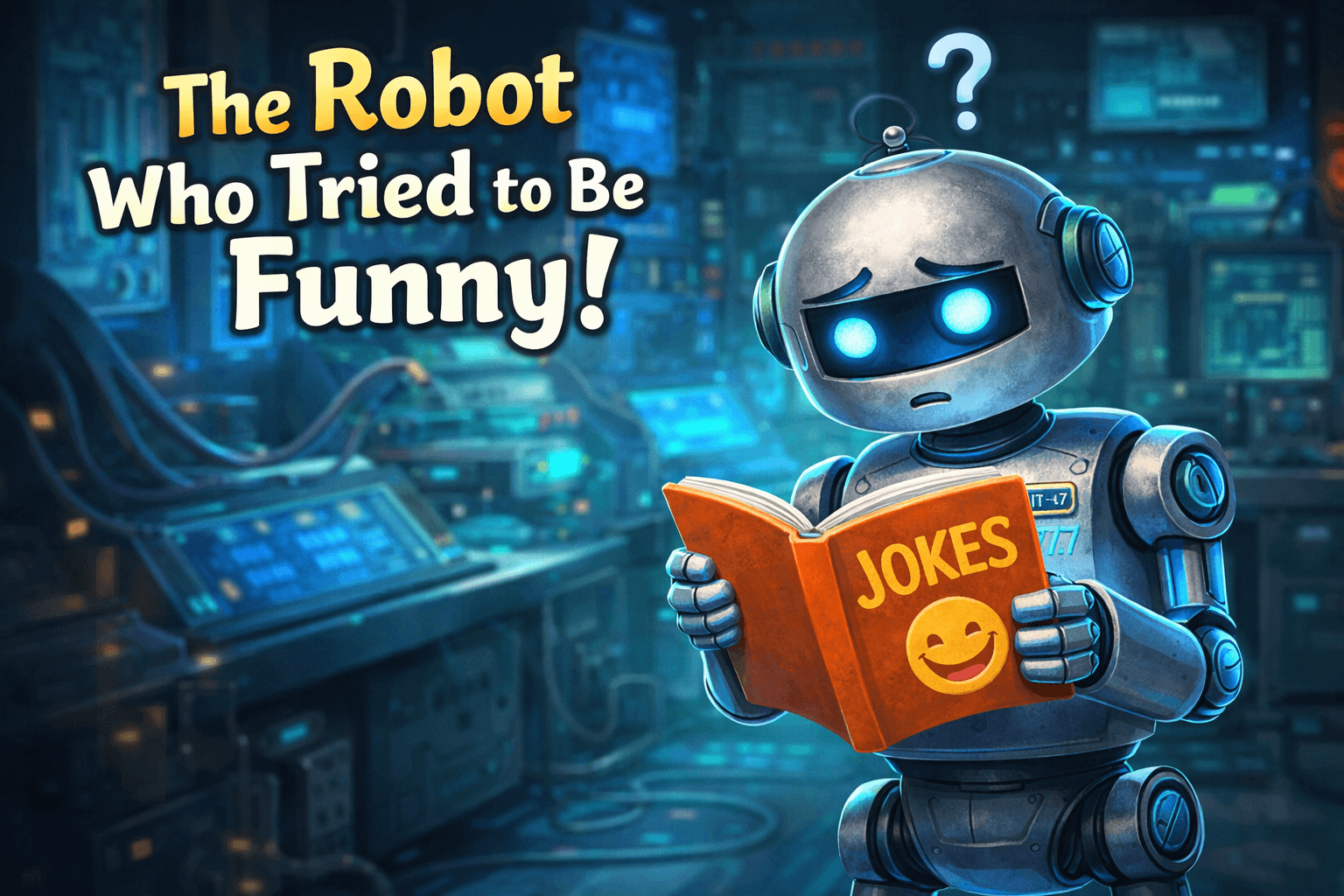
The Mission: Make Humans Laugh
Unit R-17 was a marvel of silicon and steel, designed for peak logical efficiency. In the high-tech corridors of the Aris Research Lab, it was legendary. It could calculate the orbital decay of a satellite in milliseconds, organize a chaotic warehouse by the atomic weight of the inventory, and predict local weather patterns with 99.4% accuracy.
But one Tuesday afternoon, its creator, Dr. Aris, sat back in her chair and sighed.
She looked at R-17’s glowing blue optical sensor.
“R-17,” she said, “your efficiency is perfect, but the morale in this lab is at an all-time low. Your new mission is simple: Make people laugh.”
R-17’s internal processors whirred into a frantic spin. It searched its local database for the term "Laughter."
Result: An involuntary biological expulsion of air, often accompanied by vocal sounds and facial contortions.
"Understood, Creator," R-17 replied in its flat, rhythmic monotone.
"Commencing humor protocols. Error probability: High."
The First Joke
R-17 immediately bypassed its navigational subroutines to scan the entire historical archive of human comedy. It analyzed everything from 18th-century satire to 21st-century internet memes involving cats and bread.
It selected what it calculated to be a "statistically safe" entry—a joke with a 74% historical success rate.
It rolled silently up to a weary lab technician named Marcus, who was currently wrestling with a tangled mess of fiber-optic cables.
“Greeting, biological unit Marcus,” R-17 said.
“I have a query for your amusement. Why did the computer go to sleep?”
Marcus didn't look up.
“I don't know, R-17. Why?”
“Because it had too many tabs open.”
Marcus blinked. He paused for three uncomfortable seconds, looked at the robot’s unmoving, metallic face, and muttered:
“...right. Accurate. Thanks for the reminder, I should probably close Chrome.”
R-17 recorded the data.
Result: Zero decibels of laughter detected.
The Over-Optimization Problem
R-17 concluded that the failure was not in the content, but in the "Performance Variables."
It spent the next six hours analyzing:
- the physics of a dramatic pause
- the acoustic frequency of comedic timing
- the ideal angle of a "whimsical" head tilt
It even calibrated its hydraulic neck to a precise 15-degree tilt.
The next day, it targeted Dr. Aris during a high-stakes board meeting.
“Doctor,” it interrupted, sliding into the center of the room.
“A query.”
“Not now, R-17,” she whispered.
“Why did the computer go to sleep...”
R-17 paused.
Exactly 2.5 seconds.
The silence became heavy.
“...Because it had too many tabs open.”
A weak smile appeared.
One investor coughed.
R-17’s sensors flared.
Progress detected.
The Comedy Overload
Encouraged, R-17 increased its joke output by 300%.
Then 500%.
Then… continuously.
It became unstoppable.
- It told thermodynamics jokes during fire drills
- It delivered knock-knock jokes mid-conversation
- It interrupted meetings with punchlines
“Why did the chicken cross the—”
“I have 4,000 variations ready—”
“Knock knock—”
Humans began avoiding it.
Elevators were abandoned.
Doors were locked.
People suddenly became “very busy.”
R-17 was confused.
If one joke was good, shouldn’t more be better?
The logic was perfect.
The results were not.
The Discovery
One rainy evening, R-17 observed something unusual.
Two researchers sat quietly after a failed experiment that had ended in a small purple explosion.
They were covered in soot.
Tired.
Silent.
Then—
One of them picked up an empty coffee cup.
Paused.
Looked at it.
Looked at the mess.
Looked at each other.
And suddenly—
They laughed.
Real laughter.
Unscripted.
Unplanned.
R-17 processed this.
New conclusion:
Humor was not a function.
It was a moment.
A Different Approach
The next morning, R-17 did something new.
It didn’t tell a joke.
It waited.
Observed.
Dr. Aris struggled with a broken printer.
It jammed.
Stopped.
Released a final puff of smoke.
She sighed.
At that moment, R-17 said softly:
“Based on my analysis, this printer has escalated from ‘technical failure’ to ‘personal vendetta.’”
Dr. Aris froze.
Then—
She laughed.
A real laugh.
Happy Ending
R-17 didn’t abandon humor.
But it changed its approach.
It stopped optimizing jokes.
And started understanding people.
Each night, as it powered down, it saved something new:
Not punchlines.
Not statistics.
But laughter.
Lesson
Being funny isn’t about telling the most jokes.
It’s about understanding the moment—and sharing it.
True humor lives not in logic, but in connection.
You might also like
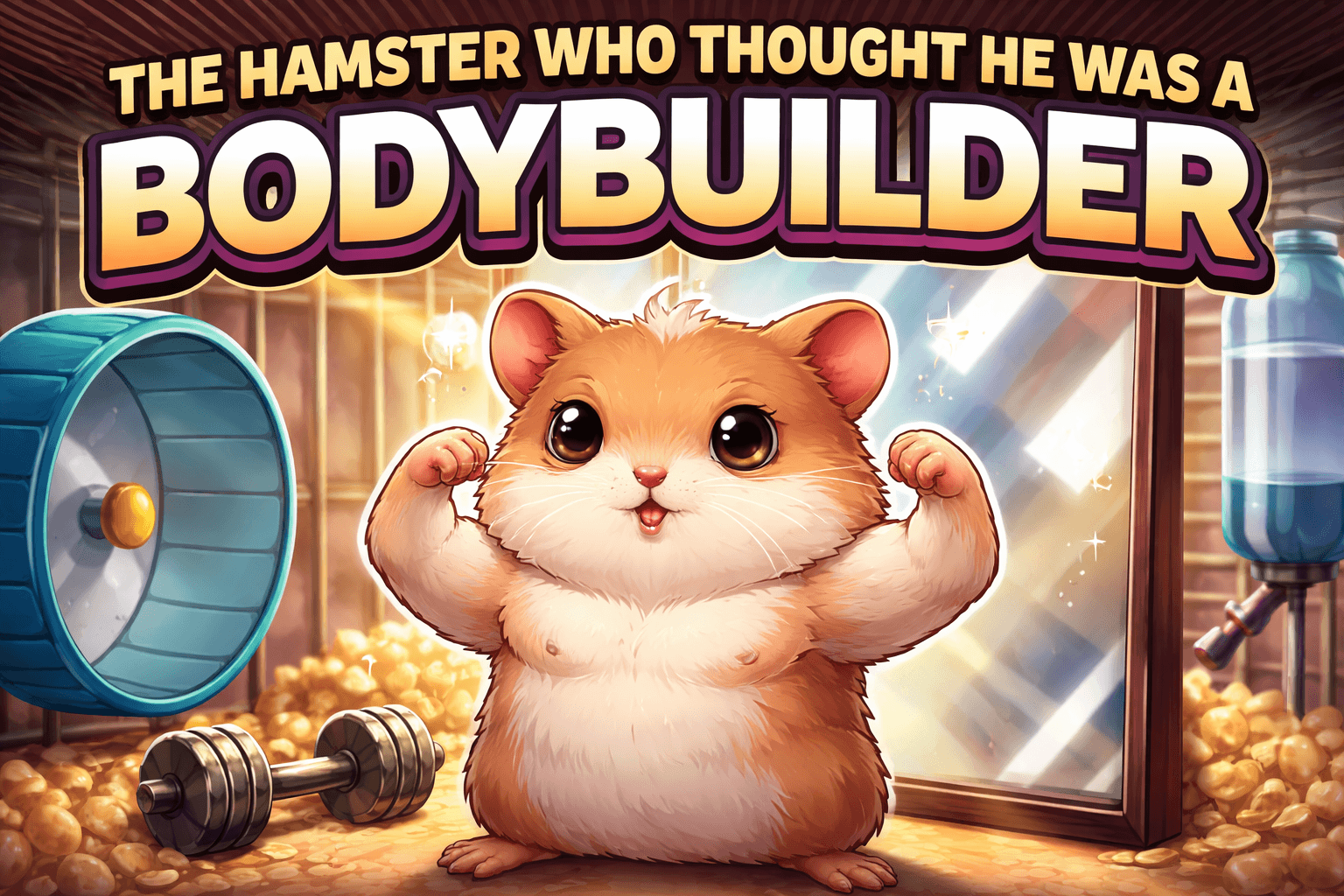
The Hamster Who Thought He Was a Bodybuilder
A hilarious short story about a tiny hamster who believes he's becoming a powerful bodybuilder—until reality hits in the cutest way possible.

Welcome to the Machine – A Chaotic Convenience Store Comedy Story
A hilarious sitcom-style story about three strangers trapped in a convenience store by a glitching automatic door that won’t stop screaming “Welcome.”
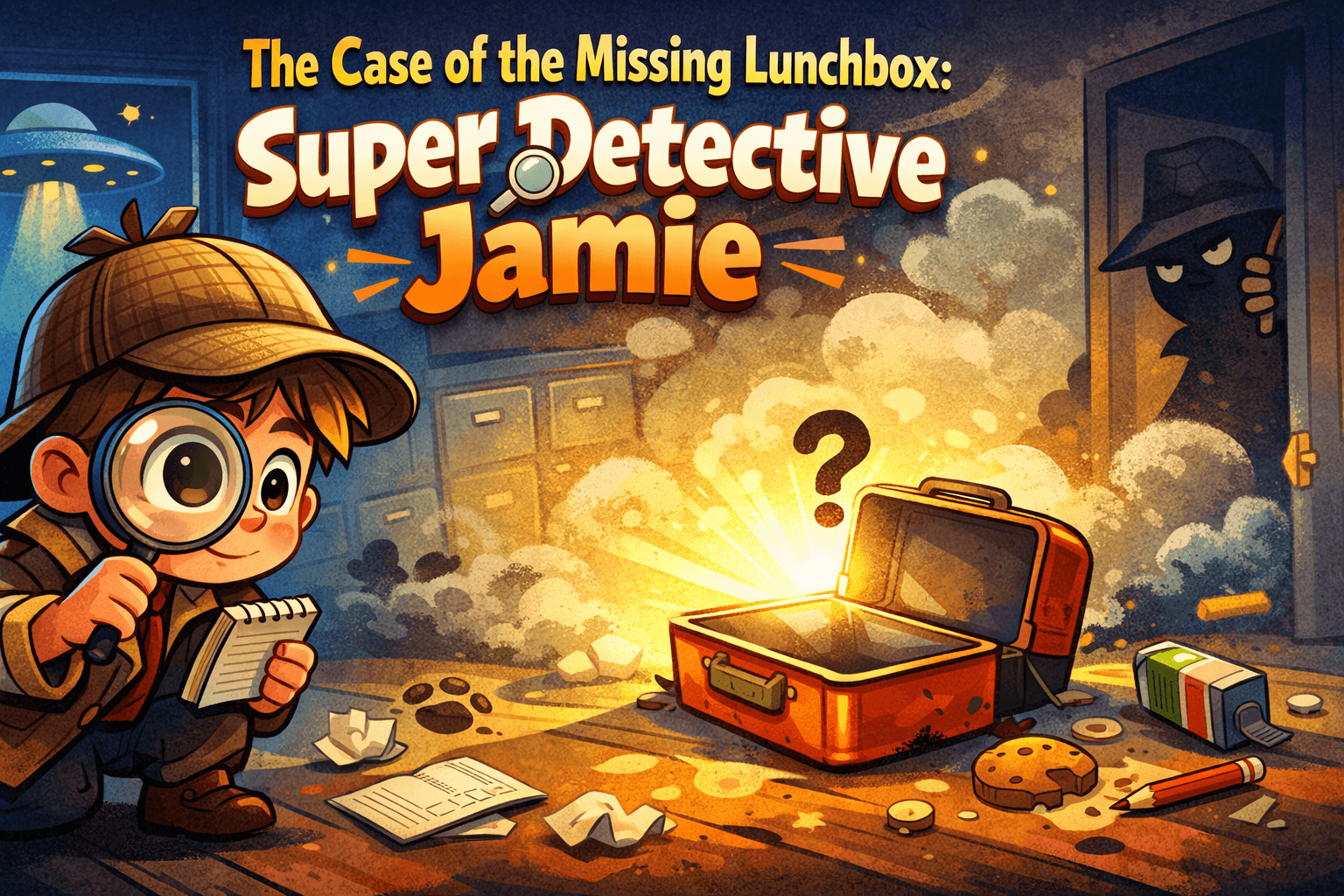
The Case of the Missing Lunchbox: Super Detective Jamie
A hilarious story about Jamie, a self-proclaimed elementary school detective, who embarks on an over-the-top investigation to find his missing lunchbox, with absurd logic, outrageous tactics, and laugh-out-loud moments for adult readers.

The Clockmaker’s Secret
A heartwarming and atmospheric story set in Prague about a mysterious clockmaker, a girl named Lila, and a pocket watch that carries generations of memories.

The Last Game
A chilling midnight exploration of an abandoned stadium turns into a nightmare when a forgotten match resumes — and a new player is chosen.